


We invite you to read a research article on the subject of Horting, published in the professional pedagogical collection of scientific papers titled "COMBAT HORTING – EDUCATIONAL PRACTICE FOR YOUNG PEOPLE."
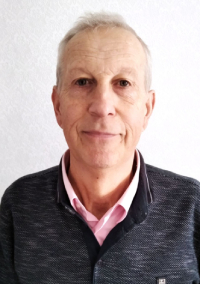 |
We invite you to read a research article on the subject of Horting—published in the professional pedagogical collection *COMBAT HORTING – EDUCATIONAL PRACTICE FOR YOUNG PEOPLE*—authored by Anatolii Petrovych Savchenko, PhD and Associate Professor at the Department of Foreign Languages of the State Tax University of Ukraine, and Eduard Anatoliiovych Yeremenko, Professor at the Department of Law Enforcement Activities of the State Tax University of Ukraine and President of the World Horting Federation.
Scientific and pedagogical activity of Savchenko Anatolii: 1980-1981 – English teacher of Rivne secondary school No. 2, Kirovohrad region. 1983-1990 – English teacher of secondary school No. 2, Korsun-Shevchenkivskyi, Cherkasy region.; 1990 – Assistant Professor of the Department of Foreign Languages, Uman State Pedagogical Institute named after P. Tychyna;
1990-1993 – Studied at the postgraduate course of the Research Institute of Pedagogy of the Ukrainian SSR (full-time); 1996-1998 – English teacher of secondary school No. 2, Korsun-Shevchenkivskyi, Cherkasy region.; 2001-2008 – English teacher of the Department of Foreign Languages, Natural Sciences Faculties, National Pedagogical University named after M.P. Dragomanova; 2008-2021 – Associate Professor of the Department of Modern European Languages of the National University of the State Tax Service of Ukraine (since 2015 the University of the State Tax Service of Ukraine). 2021 – 2023 – Associate Professor of the Department of Language Training and Social Communications of the State Tax University of Ukraine. 2023 – to the present – Associate Professor of the Department of Foreign Languages of the State Tax University of Ukraine.
|
|
Anatolii Savchenko |
COMBAT HORTING – EDUCATIONAL PRACTICE FOR YOUNG PEOPLE
You can download the research article via the link in the PDF file:
About the authors:
Savchenko Anatoliy
Candidate of Pedagogical Sciences, Professor of the Department of Modern European Languages of the Educational and Scientific Institute of Humanities of the University of the State Fiscal Service of Ukraine;
Yeromenko Eduard
Candidate of Pedagogical Sciences, Deputy Director of the Educational and Scientific Institute of Special Physical and Combat Training and Rehabilitation of the University of the State Fiscal Service of Ukraine, Professor of the Department of Horting and Rehabilitation, Member of the UNESCO Department "Preventive Education and Social Policy", Honored Worker of Physical Culture and Sports of Ukraine, Master of Sports of Ukraine of international class, Honored Trainer of Ukraine, President of the World Horting Federation, participant in hostilities
Savchenko Anatoliy,
Yeromenko Eduard
University of SFS of Ukraine
Abstract. Combat horting is a universal element in all cultures. It is especially popular with young people; statistics show that 61% of young people aged 15-24 years regularly (at least once a week) take part in sports events. Another reason for the popularity of sport is that sport provides young people with social opportunities
interaction through which they can develop the knowledge, skills and attitudes necessary for their full participation in civil society. Culture and sport are human rights and are related to various other rights.
Key words: combat training, culture, physical culture, sport, youth, competition, society, social, physical skills, physical exercises, identity.
Combat horting, physical culture is one aspect of the general culture of society; it is a sphere of social activity intended to strengthen personal health, develop one’s physical capabilities, and apply the population’s physical skills to the service of society. The basic indicators of the level of physical culture in a society are the population’s health and physical development and the role of physical culture in upbringing and education, production, everyday life, and the structure of free time; other important indicators are the quality of physical education, the organization of amateur sports, and the winning of major athletic competitions. The major forms of physical culture are physical exercise; series of physical exercises and exercise competitions; hardening of the body; occupational and everyday hygiene; physical activities such as hiking, cycling, and boating; and physical labor as recreation for people who work at sedentary jobs.
Combat horting have historically included various actions derived from everyday life. Sports of ancient origin developed from distinctive physical exercises and movements used in work and battle. Movements used in physical education since ancient times include running, jumping, throwing, weight lifting, rowing, and swimming. Some modern sports evolved in the 19th and 20th centuries from existing sports and related spheres of culture; these include many athletic games, gymnastics, rhythmic gymnastics, the modern pentathlon, figure skating, orienteering, and touring. Technical sports came about with the development of technology and include automobile racing, motorcycle racing, cycling, airplane sports, and underwater sports.
Researchers use many approaches to investigate the influence of sports on individuals as well as the influence of parents on their children. Millions of youth each year take part in sports, which can foster positive development. Of paramount importance to a successful youth sport experience is the relational environment. Youth sports provide an opportunity for parents and children to form an emotional bond. Research by Dorsch, Smith and McDonough found that parents experienced many changes in their behavior, cognition, affect, and general parent-child relationship as a result of their child’s participation in youth sports. Similarly, a child’s perceived quality of the parent-child relationship has been shown to be a predictor of a child’s enjoyment and experience while playing the sport.
Parents play a large role in the sport experience of their children. In fact, parents have been shown to have the largest impact compared to peers, teachers, and coaches. Their influences can be communicated through support and their own motivations for their child’s participation. For this study, we have defined parental support as overt behaviors and activities parents perform to help children be successful in their selected activity and to help them feel positive about their efforts. Support can be material such as registration or emotional support. Results reported by Brustad suggest that parental beliefs and positive sentiments about their child’s physical activity was a greater influence on a child participation and motivation than role-playing factors. Thus, it is important to understand the types of support that many parents provide and view as important. Previous research has shown that parents have an important role in their child’s development and more recent research suggests this extends into a parent’s involvement in their child’s activities, such youth sports programs). We argue that relational scaffolding theory, as postulated by Vygotsky, can be used to conceptualize the parent-child interactions surrounding community youth sport participation. Relational scaffolding theory assumes that children learn through supportive interactions with others which make possible thoughts or actions that otherwise would be outside of the grasp of the child. For example, when teaching a child a skill, a parent may begin training the child using a great deal of hands-on instruction and modeling. As the child becomes increasingly more confident in performing the skill, the parent allows the child to function without as much modeling and guidance, while still offering support as needed. Eventually, after the support and training of the parent over a period of time and with increasing mastery, the child is able to maneuver the skill without any assistance from parent [9].
Since youth sports have been viewed by previous researchers and scholars as a mode of instruction, socialization, and development, understanding the nature of the interactions between parents and children is important. To this end, the current study investigates the nature of parent’s involvement and their supportive behaviors during their child’s participation in a community soccer program. The following two research questions guided this inquiry: What behaviors and activities do parents perform to show support of their child’s involvement in a community soccer program? Which supportive behaviors are done the most and least often by parents? The term «culture» is used in many different ways, for instance, popular culture, mass culture, urban culture, feminist culture, minority culture, corporate culture and, last but not least, youth culture. We can also talk about a cultured person, meaning someone who has good manners and is formally educated in the traditions of literature and art, or about culture shock: a person’s disorientation and frustration when experiencing an unfamiliar culture. None of these meanings of “culture” is usually dealt with by ministries of culture or their equivalent governmental authorities.
The word “culture” comes from the Latin, “cultura” meaning “to tend, guard, cultivate, till”. It was first around 1500 CE that the word started to appear in the figurative sense of “cultivation through education” and it was only in the mid-19th century that the word was linked to ideas about the collective customs and ways of life of different societies. It is this meaning of culture as inherited patterns of shared meanings and common understandings that we address in this section [4].
No culture is homogenous. Within each culture, it is possible to identify «subcultures»: groups of people with distinctive sets of practices and behaviours that set them apart from the larger culture and from other subcultures. Culture is as difficult to define as it is to seize; cultures are ever evolving and changing. To paraphrase Heraclitus about not stepping twice in the same river, the culture in which we communicate today is not the same in which we communicated yesterday. Yet, in our eyes and perceptions, it is truly the same. Young people generally are often portrayed as being full of ambitions and hopes for the world and, therefore, important drivers of cultural change. The United Nations Population Fund describes well this expectation on young people as shapers of the culture of the future. As they grow through adolescence, young people develop their identity and become autonomous individuals. Young people do not share their elders’ experiences and memories. They develop their own ways of perceiving, appreciating, classifying and distinguishing issues, and the codes, symbols and language in which to express them [38–46]. Young people’s responses to the changing world, and their unique ways of explaining and communicating their experience, can help transform their cultures and ready their societies to meet new challenges. Their dynamism can change some of the archaic and harmful aspects of their cultures that older generations take to be immutable. Culture is everything. Culture is the way we dress, the way we carry our heads, the way we walk, the way we tie our ties. It is not only the fact of writing books or building houses [1].
Sport is a universal element in all cultures and therefore we have chosen to include it as a theme for Compass. Sport is popular particularly with young people; statistics show that 61 % of young people aged between 15 and 24 participate regularly (at least once a week) in sporting activities in the EU2. Another reason for including sport is that sports provide young people with opportunities for social interaction through which they can develop the knowledge, skills and attitudes necessary for their full participation in civil society. Culture and sport are both human rights and related to various other human rights. They are also the grounds on which human rights are often challenged and abused, including those of young people [2].
The UN Committee on Economic, Social and Cultural Rights defines culture as follows: Culture encompasses, inter alia, ways of life, language, oral and written literature, music and song, non-verbal communication, religion or belief systems, rites and ceremonies, sport and games, methods of production or technology, natural and man-made environments, food, clothing and shelter and the arts, customs and traditions through which individuals, groups of individuals and communities express their humanity and the meaning they give to their existence, and build their world view representing their encounter with the external forces affecting their lives [5].
Some aspects of culture are highly visible, for instance the way people dress. Other aspects are mostly unconscious, almost instinctive. One way of thinking about culture is to use the metaphor of an iceberg. An iceberg has a visible part above the waterline and a larger, invisible section below. In the same way, culture has some aspects that can be observed and of which we are conscious and other aspects that can only be suspected or imagined and reached through dialogue and introspection [19]. Just as the root of the iceberg is much larger than the upper part, so is the greater part of culture “invisible”. The risk is to take the part for the whole. By focusing on what is visible to us (and that we seem to «understand») we risk missing the essential in the persons, in the human beings.
Culture is also the lens through which we view and interpret life and society. Culture is passed over from one generation to the next one, while incorporating new elements and discarding others. Because we have taken so much of the prevailing culture in with our mother’s milk it is very hard to view our own culture objectively; it just seems to be normal and natural that our own culture feels «right» and other cultures with their different ways of thinking and doing seem unusual – maybe even wrong [3; 7; 26].
Culture is also explained as a dynamic construct made by people themselves in response to their needs. Consider for a moment the arctic environment of northern Sweden; people there face different challenges from people living on the warm shores of the Mediterranean; consequently they have developed different responses – different ways of life – cultures. We often generalise and speak about a particular country’s culture and overlook the fact that culture is pluralistic. Similarly, it is misleading to talk about youth culture as a homogeneous construct. In Europe, the social, economic changes that have taken place since World War II have led to a burgeoning of youth sub-cultures [8; 10; 25]. Young people, with their own specific needs, knowledge, principles, practices, interests, behaviours and dreams, renew the culture in which they grow up and make it theirs, some by fully embracing it, others by refusing it.
Access to and participation in cultural activities can be a vector of cohesion and integration and promote active citizenship. Thus, it is important that young people have “access to culture”, whether as consumers, for instance of libraries, museums, operas or football matches, or as producers, for instance, of music and video films or active participants in dance or sports [11; 12; 23].
Access of young people to culture may be facilitated in various ways, for example through offering subsidised prices, season tickets, decreased subscription schemes, or free access for young people to museums, art galleries, operas, theatre performances and symphony orchestra concerts [13; 24; 28]. Access is also encouraged through educational and leisure activities, for example subsidies to youth theatre groups and the provision of youth clubs, community centres, youth and culture centres. The Revised European Charter on the Participation of Young People in Local and Regional Life recommends local and regional authorities to “support organised socio-cultural activities – run by youth associations and organisations, youth groups and community centres – which, together with the family and school or work, are one of the pillars of social cohesion in the municipality or region; these are an ideal channel for youth participation and the implementation of youth policies in the fields of sport, culture, crafts and trades, artistic and other forms of creation and expression, as well as in the field of social action”.
In the understanding of the charter, social and cultural participation are intertwined. Most youth organisations develop their activities in this spirit [14; 15; 22]. They may or not have culture or sport as their first aim, but they exist and work to promote the well being of young people which cannot be realised without a social, cultural and sports component. Some youth organisations address directly forms of cultural participation and intercultural exchange (such as the European Federation for Intercultural Learning, Youth for Exchange and Understanding, or the Ecumenical Youth Council in Europe); others place a more direct focus on sports, such as the International Sports and Cultural Association or the European Sports Non-governmental Organisation [27; 29–37]. All of them, especially the multitude of big and small organisations active at local level, offer opportunities for young people to be actors in social and cultural life, and this means a lot more than to be consumers of cultural offers made by others [6].
Today, as a result of modern technology and globalisation, the two cultures have more in common than they did in the past, but nonetheless they still have many differences, including different notions of what it means to be European [16; 17; 21].
Who we are or believe we are depends to a large extent on the cultures we grow up in, are exposed to or decided to embrace. Each of us, however, is also unique. It is the accident of where we are born that initially defines, for example, the languages we first learn to speak, the food we like best and the religion we follow, or not. Identity, like culture, is a complex concept with parts above and below the line of consciousness that change with time and location. We can talk about personal identity, gender identity, national, cultural, ethnical, class or familial identity, and in fact about any other sort of identity [18; 20].
Accepting that identity is intricate, diverse and dynamic and about being oneself, and at the same time recognising and accepting others’ rights to express their own identities is essential to building a culture of human rights, where everyone is due equal rights and respect. Identity is what makes each of us unique. However, this uniqueness is not the same throughout our lives; it is ever changing. Culture in contemporary societies is a site of controversy and struggle over identity, belonging, legitimacy and entitlement.