 |
We invite you to read a research article on the subject of Horting—published in the professional pedagogical collection *COMBAT HORTING – EDUCATIONAL PRACTICE FOR YOUNG PEOPLE*—authored by Anatolii Petrovych Savchenko, PhD and Associate Professor at the Department of Foreign Languages of the State Tax University of Ukraine, and Eduard Anatoliiovych Yeremenko, Professor at the Department of Law Enforcement Activities of the State Tax University of Ukraine and President of the World Horting Federation.
Scientific and pedagogical activity of Savchenko Anatolii: 1980-1981 – English teacher of Rivne secondary school No. 2, Kirovohrad region. 1983-1990 – English teacher of secondary school No. 2, Korsun-Shevchenkivskyi, Cherkasy region.; 1990 – Assistant Professor of the Department of Foreign Languages, Uman State Pedagogical Institute named after P. Tychyna;
1990-1993 – Studied at the postgraduate course of the Research Institute of Pedagogy of the Ukrainian SSR (full-time); 1996-1998 – English teacher of secondary school No. 2, Korsun-Shevchenkivskyi, Cherkasy region.; 2001-2008 – English teacher of the Department of Foreign Languages, Natural Sciences Faculties, National Pedagogical University named after M.P. Dragomanova; 2008-2021 – Associate Professor of the Department of Modern European Languages of the National University of the State Tax Service of Ukraine (since 2015 the University of the State Tax Service of Ukraine). 2021 – 2023 – Associate Professor of the Department of Language Training and Social Communications of the State Tax University of Ukraine. 2023 – to the present – Associate Professor of the Department of Foreign Languages of the State Tax University of Ukraine.
|
|
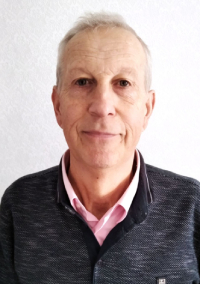
Anatolii Savchenko
|
|
COMBAT HORTING – EDUCATIONAL PRACTICE FOR YOUNG PEOPLE
You can download the research article via the link in the PDF file:
About the authors:
Savchenko Anatoliy
Candidate of Pedagogical Sciences, Professor of the Department of Modern European Languages of the Educational and Scientific Institute of Humanities of the University of the State Fiscal Service of Ukraine;
Yeromenko Eduard
Candidate of Pedagogical Sciences, Deputy Director of the Educational and Scientific Institute of Special Physical and Combat Training and Rehabilitation of the University of the State Fiscal Service of Ukraine, Professor of the Department of Horting and Rehabilitation, Member of the UNESCO Department "Preventive Education and Social Policy", Honored Worker of Physical Culture and Sports of Ukraine, Master of Sports of Ukraine of international class, Honored Trainer of Ukraine, President of the World Horting Federation, participant in hostilities
Savchenko Anatoliy,
Yeromenko Eduard
University of SFS of Ukraine
Abstract. Combat horting is a universal element in all cultures. It is especially popular with young people; statistics show that 61% of young people aged 15-24 years regularly (at least once a week) take part in sports events. Another reason for the popularity of sport is that sport provides young people with social opportunities
interaction through which they can develop the knowledge, skills and attitudes necessary for their full participation in civil society. Culture and sport are human rights and are related to various other rights.
Key words: combat training, culture, physical culture, sport, youth, competition, society, social, physical skills, physical exercises, identity.
Combat horting, physical culture is one aspect of the general culture of society; it is a sphere of social activity intended to strengthen personal health, develop one’s physical capabilities, and apply the population’s physical skills to the service of society. The basic indicators of the level of physical culture in a society are the population’s health and physical development and the role of physical culture in upbringing and education, production, everyday life, and the structure of free time; other important indicators are the quality of physical education, the organization of amateur sports, and the winning of major athletic competitions. The major forms of physical culture are physical exercise; series of physical exercises and exercise competitions; hardening of the body; occupational and everyday hygiene; physical activities such as hiking, cycling, and boating; and physical labor as recreation for people who work at sedentary jobs.